
Dear Colleague
South African poet, C. Louis Leipoldt, described October in one of his poems as the most beautiful month of the year. And rightfully so! It is so beautiful to see how the landscapes suddenly turn into different shades of green, with a kaleidoscope of colour in between. Enjoy the beauty that Spring brings; it all passes by so quickly.
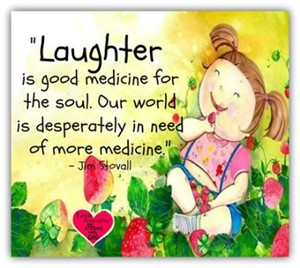
It is said that laughter is good for the soul. Under the constant uncertainty of the past 18 months, it would be good to look for things that can make you laugh; exercise all those muscles in your face. Laughter is contagious and possibly you might just light up someone else’s day!
Ransomware attack at the Department of Justice and Constitutional Development (DOJ & CD)
As you are most probably aware of by now, the extensive ransomware attack on the DOJ & CD servers had a far-reaching effect on service delivery. Various state departments, some of whose services are essential to the administration of the deceased estates process, were impacted. Since 06 September 2021, when the attack took place, after more than a month of total shutdown, some progress has been made, but mostly on child maintenance and court cases. The DOJ & CD’s Information Technology (IT) Department is still working on the system to ensure full functionality in terms of trusts, deceased estates and insolvencies. A timeframe regarding a return to normal cannot be confirmed yet.
As described in Newsletter 58 of July 2021, backlogs were already experienced before this event took place. These backlogs were exacerbated by the recent misfortune at these state departments, which have had a detrimental effect on the administration of estates. This causes a great deal of stress on the smooth operation of processes. We are hopeful that these processes will be fully operational soon. Please be assured that we will, as always, do our utmost best to deliver the most efficient service possible, despite the difficult circumstances. We appreciate your patience and understanding, and we request that you convey this message to your clients as well.
Letters of Executorship
Please note that there has been and still is a delay in issuing of Letters of Executorship. EFBOE makes use of reputable channels to assist with the obtaining of this most essential document, to enable us to proceed with the administration of estates. It may sometimes seem as if this process takes too long, but we assure you that the correct protocols are being followed to obtain this document.
South African poet, C. Louis Leipoldt, described October in one of his poems as the most beautiful month of the year. And rightfully so! It is so beautiful to see how the landscapes suddenly turn into different shades of green, with a kaleidoscope of colour in between. Enjoy the beauty that Spring brings; it all passes by so quickly.
It is said that laughter is good for the soul. Under the constant uncertainty of the past 18 months, it would be good to look for things that can make you laugh; exercise all those muscles in your face. Laughter is contagious and possibly you might just light up someone else’s day!
Ransomware attack at the Department of Justice and Constitutional Development (DOJ & CD)
As you are most probably aware of by now, the extensive ransomware attack on the DOJ & CD servers had a far-reaching effect on service delivery. Various state departments, some of whose services are essential to the administration of the deceased estates process, were impacted. Since 06 September 2021, when the attack took place, after more than a month of total shutdown, some progress has been made, but mostly on child maintenance and court cases. The DOJ & CD’s Information Technology (IT) Department is still working on the system to ensure full functionality in terms of trusts, deceased estates and insolvencies. A timeframe regarding a return to normal cannot be confirmed yet.
As described in Newsletter 58 of July 2021, backlogs were already experienced before this event took place. These backlogs were exacerbated by the recent misfortune at these state departments, which have had a detrimental effect on the administration of estates. This causes a great deal of stress on the smooth operation of processes. We are hopeful that these processes will be fully operational soon. Please be assured that we will, as always, do our utmost best to deliver the most efficient service possible, despite the difficult circumstances. We appreciate your patience and understanding, and we request that you convey this message to your clients as well.
Letters of Executorship
Please note that there has been and still is a delay in issuing of Letters of Executorship. EFBOE makes use of reputable channels to assist with the obtaining of this most essential document, to enable us to proceed with the administration of estates. It may sometimes seem as if this process takes too long, but we assure you that the correct protocols are being followed to obtain this document.
LOOK OUT FOR OUR FESTIVE SEASON EDITION NEXT MONTH!
A NOTICEABLE INCREASE IN THE DEMAND FOR WILLS
A Will is one of the most important documents that a person will sign in their lifetime. With the arrival of the pandemic, and accompanying lockdowns for more than 18 months, people have become more aware of their mortality. As the reports of deaths increased, so did the demand for Wills.
Sanlam Trust recently discussed the results of an interesting study by Band Atlas that was released in August 2021. According to this study, 44% of economically active South Africans have either amended or created Wills in the past 18 months. Sanlam Trust confirms this finding as they are experiencing an increased demand for Wills among demographics that, traditionally, have not been interested in estate planning.
The study further found that 84% of people have become more aware of their mortality. The Head of Wills Operations at Sanlam Trust, Moremadi Mabule, confirmed that the current pandemic has contributed to people thinking about death more.
Another result of the study found that motives for having estate planning differ according to age group, i.e.:
- In the age group of white men, 50 years and older, tax efficiency was the main consideration.
- In the age group of 25 to 39 years, controlling who will receive which assets when they die was the main concern.
That being said, even with the above findings, 54% of South Africans still do not have a Will. The main reasons given by 90% of the respondents who said that they did not have a Will were:
- They felt that they did not have enough assets to warrant having a Will.
- If they did have assets, they simply had not got around to drafting a Will.
Not having enough assets is a myth and misconceptions about Wills. Even if a person thinks that they do not have enough assets, it can still be a heavy burden on those left behind if an estate must be administered on an intestate basis. The reality when someone passes away is that somebody must still handle whatever legacy is left behind. Even if people feel that they do not have any assets, this is hardly ever the case. People very seldom have nothing. It is thus never a good idea to not have a Will in place. And putting off the drafting of a Will can prove to be quite detrimental when death comes knocking at the door.
According to Nabaweiya Abrahams, Quality and Control Manager in Sanlam’s Wills Department, people also have the perception that drafting a Will is too complicated or too expensive, or that their “family will know what to do”. Let us set the record straight:
According to Nabaweiya Abrahams, Quality and Control Manager in Sanlam’s Wills Department, people also have the perception that drafting a Will is too complicated or too expensive, or that their “family will know what to do”. Let us set the record straight:
- Regarding the first perception: There are numerous service providers with the needed expertise to draft a legal, airtight Will who do not charge a fee for this service. for Wills, and who have the expertise needed by a novice to draft a legal, airtight Will. EFBOE is a trust company who also provides this service.
- Regarding the second perception: “Family will know what to do” has, unfortunately, proven to mostly not be the case. It is sad to acknowledge that death and assets can reveal the worst in families. To die intestate leaves an additional burden on loved ones, and can also cause family feuds that could last lifetimes. Even if families knew what to do, they are still bound by the stipulations in the Intestate Succession Act. That could mean that the persons the deceased intended to benefit from their legacy, would not necessarily end up with it. In a Will these wishes can be expressed clearly and much heart ache, stress and fighting can be avoided.
Even with the benefits of this study and its findings, it seems as if South Africans still do not realise how important it is to have a valid Will, and the dire consequences caused for loved ones should a person pass away without a Will in place. This could, for instance, force a surviving spouse to sell the family home to pay out the heirs, or a severe delay before an estate can pay out its beneficiaries, potentially causing great financial distress for the family.
Having an outdated Will could have the same effect. Often a person marries but does not remember to update their Will. This could leave the spouse with nothing, while the parents inherit the full estate of the deceased. As circumstances change, i.e. marriage, divorce, or new additions to the family, a Will should keep track of the changes, and be updated as and when necessary.
The Band Atlas study also indicated that over the past 18 months, 35% of people updated their Wills, while 9% drafted their Will for the first time. Nearly half of the people drafting a Will for the first time came from lower-income groups. This suggests that South Africans across the economic spectrum are starting to put more consideration into their financial legacy.
According to Mabule, there is a “psychological shift with different demographics starting to invest in estate planning, which is an indication that it is no longer seen as ‘reserved’ for the rich”. Abrahams concurred by saying that her department saw “a flood” of requests for Wills from people in the lower-income groups, as well as from the youth.
These statistics are quite eye-opening. The fact is that you should never wait for a catastrophic event before putting thought into your legacy; rather act responsibly and write a valid, air-tight Will. This would be a comforting legacy to leave behind to ensure an as smooth as possible administration process.
Source: https://www.moonstone.co.za/increased-public-interest-in-wills/
_____________________________________________________________________________
Despite the way that the lives and legacies of the famous grab our attention, every single one of us leaves a legacy.
The greatest legacy one can pass on to one’s children and grandchildren
is not money or other material things accumulated in one’s life,
but rather a legacy of character and faith.
Billy Graham
The greatest legacy one can pass on to one’s children and grandchildren
is not money or other material things accumulated in one’s life,
but rather a legacy of character and faith.
Billy Graham
Until next time!
The Let’s Talk EFBOE Team